
Plastering
Internal Plastering & Skimming
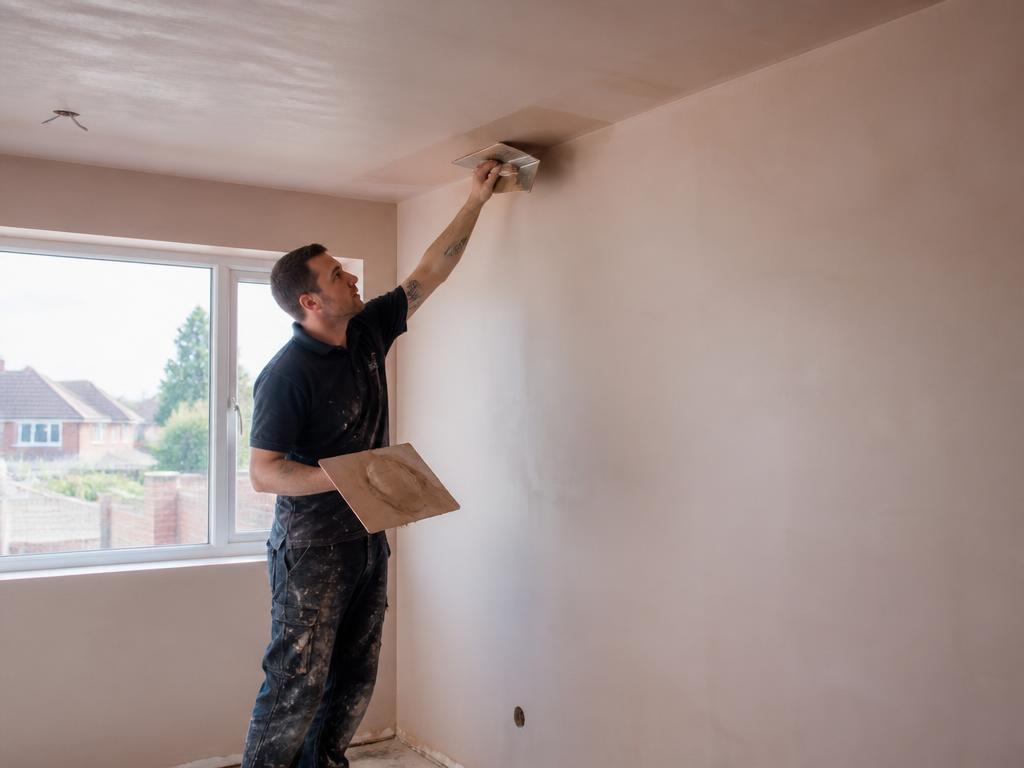
Where the trade started: skimming, board and set, patching and making good — walls and ceilings left dead flat, ready to decorate or take a Venetian finish.
In short
- —Skimming over artex, board and old plaster
- —Dot-and-dab, board and set, full re-plasters
- —Patching, reveals, coving and making good
Skimming and re-plastering
Old plaster, artex, tired ceilings and blown patches are all fixable. Surfaces are checked for hollow areas, stabilised or overboarded where needed, then skimmed to a flat polished finish that takes paint evenly.
Full re-plasters, single rooms and one-off ceilings are all taken on, along with dot-and-dab boarding on new walls and extensions.
Patching and making good
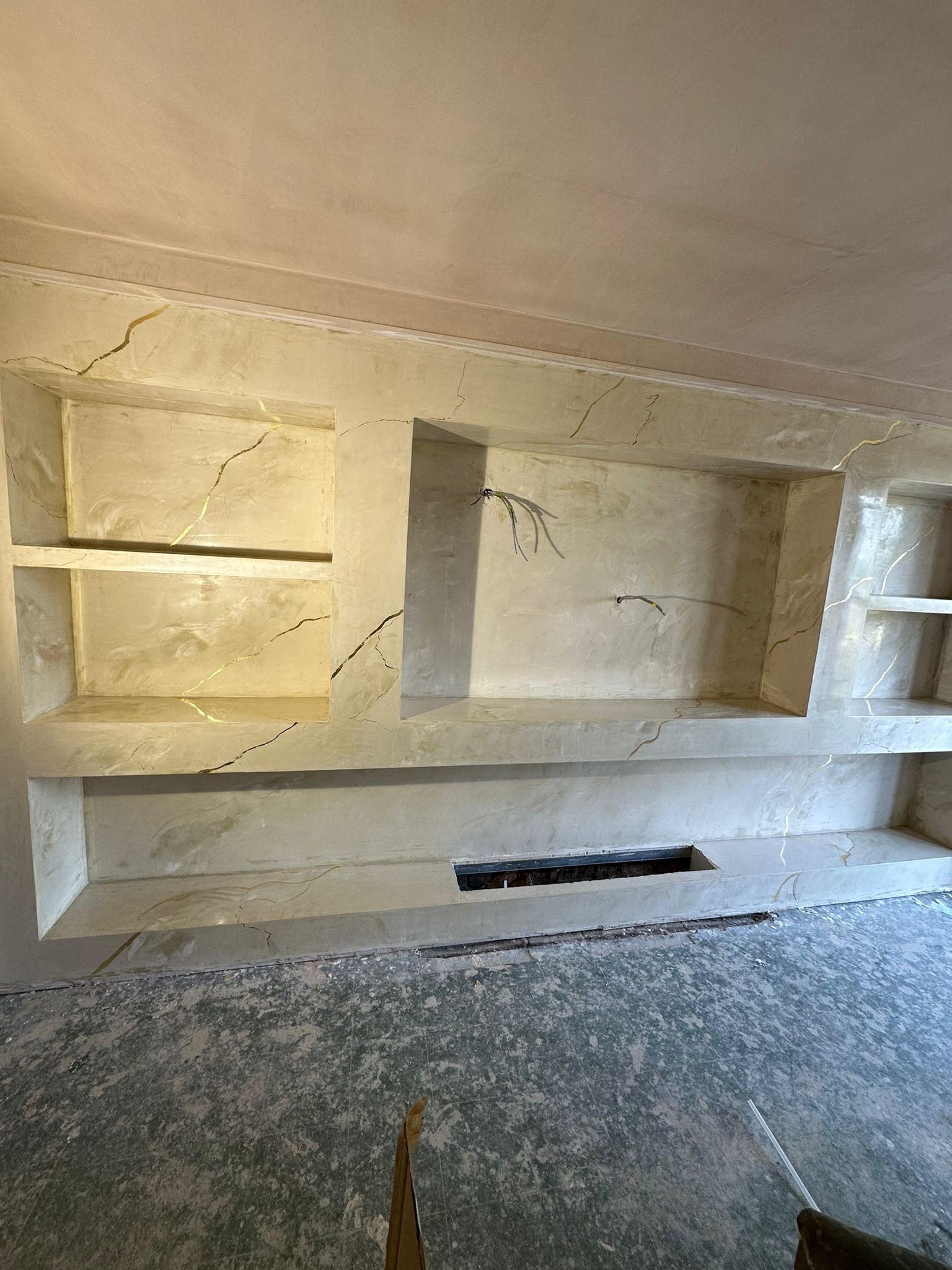
After electrics, plumbing, removed walls or new openings, chases and patches are filled, beaded and skimmed back in so the repair disappears rather than showing under the paint.
Preparing walls for Venetian plaster
Decorative finishes show every flaw underneath. If a Venetian or micro cement finish is planned, the base plaster is taken flatter than a normal decorating standard so the polish has something true to sit on.
How the job runs
01
Survey
Walls and ceilings are sounded for hollow or blown areas and the scope agreed.
02
Protect and prep
Floors and fittings are covered, loose material removed, beads and angles set.
03
Board or bond
Overboarding, dot-and-dab or bonding coat where the background needs building out.
04
Skim
Two-coat finish plaster, trowelled and polished flat.
05
Clean down
Waste removed and the room left clean and ready for decoration once dry.
Common questions
Can you skim over artex?
Yes. Depending on the depth of the pattern it is either sealed and skimmed or overboarded first.
How long before I can paint?
Fresh plaster normally needs three to seven days to dry out, then a thinned mist coat before topcoats.
Do you do small patch repairs?
Yes — chases, patches, reveals and making good after other trades.