
Venetian plaster
Bespoke Venetian Panels
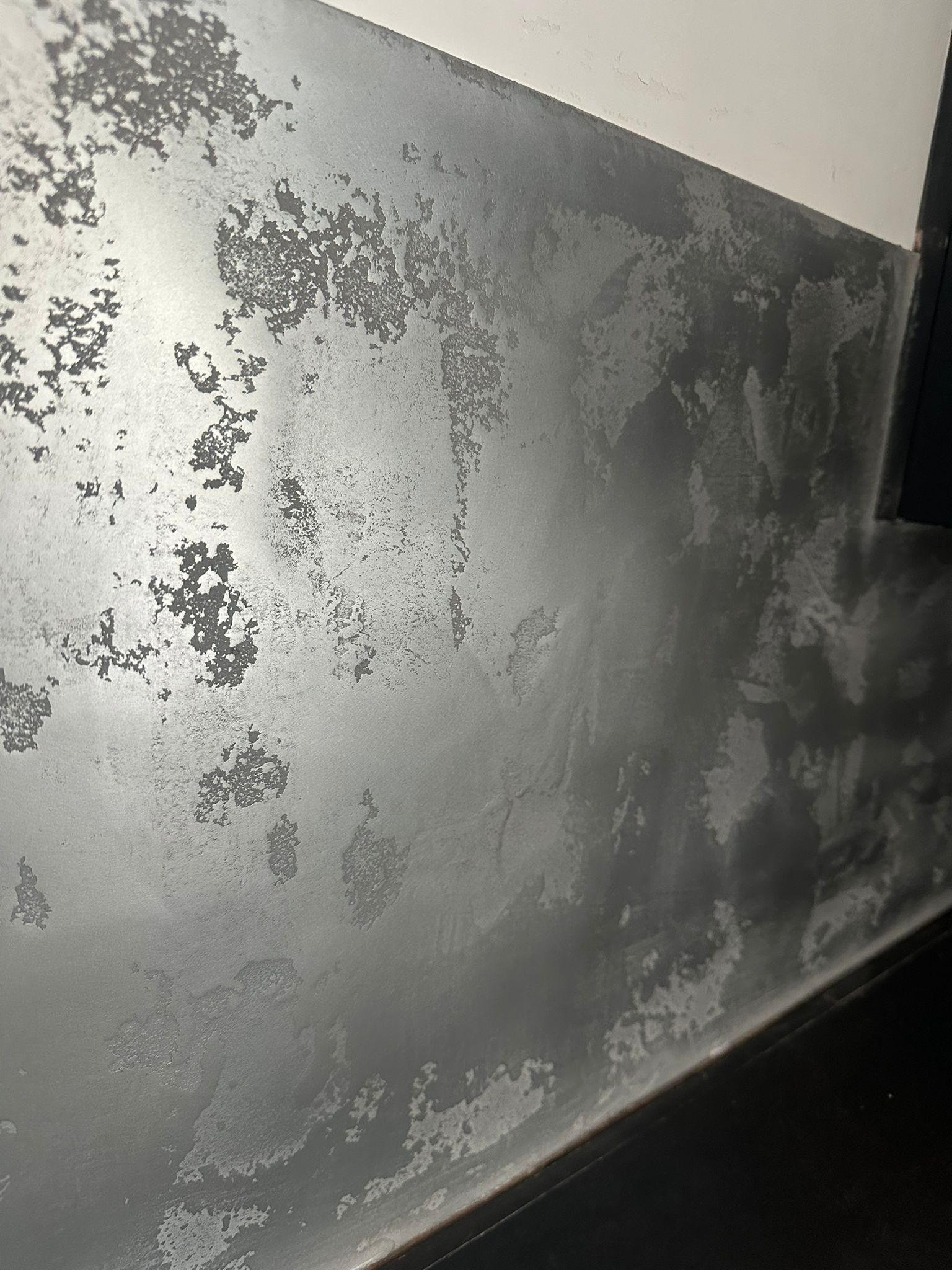
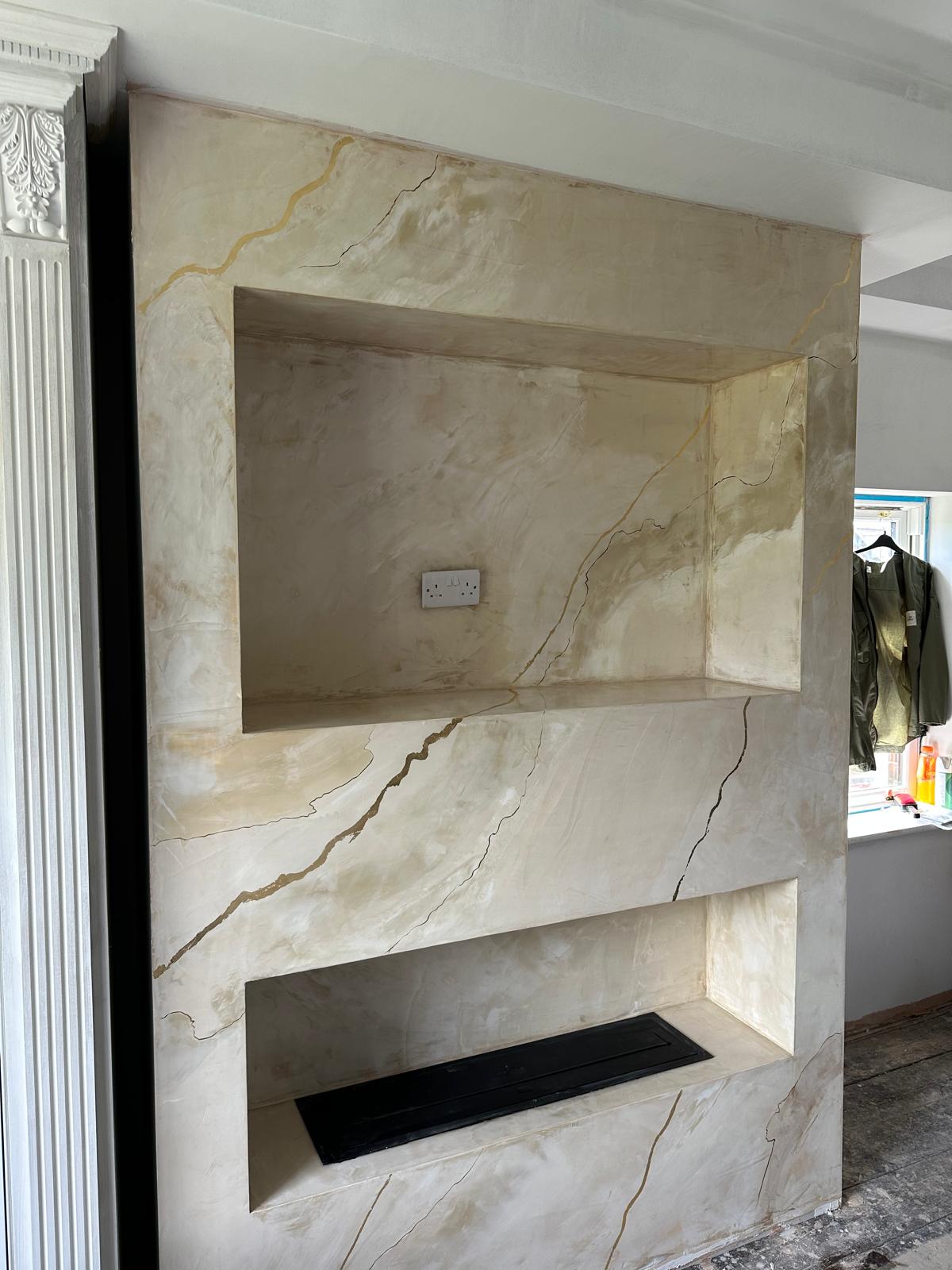
Scagliola, Travertino and Encausto worked as panels, fire surrounds, columns and joinery inserts — single hand-veined pieces made to your dimensions.
In short
- —Hand-drawn marble veining
- —Fire surrounds, columns, vanities
- —Off-site preparation where needed
Panels made as single pieces
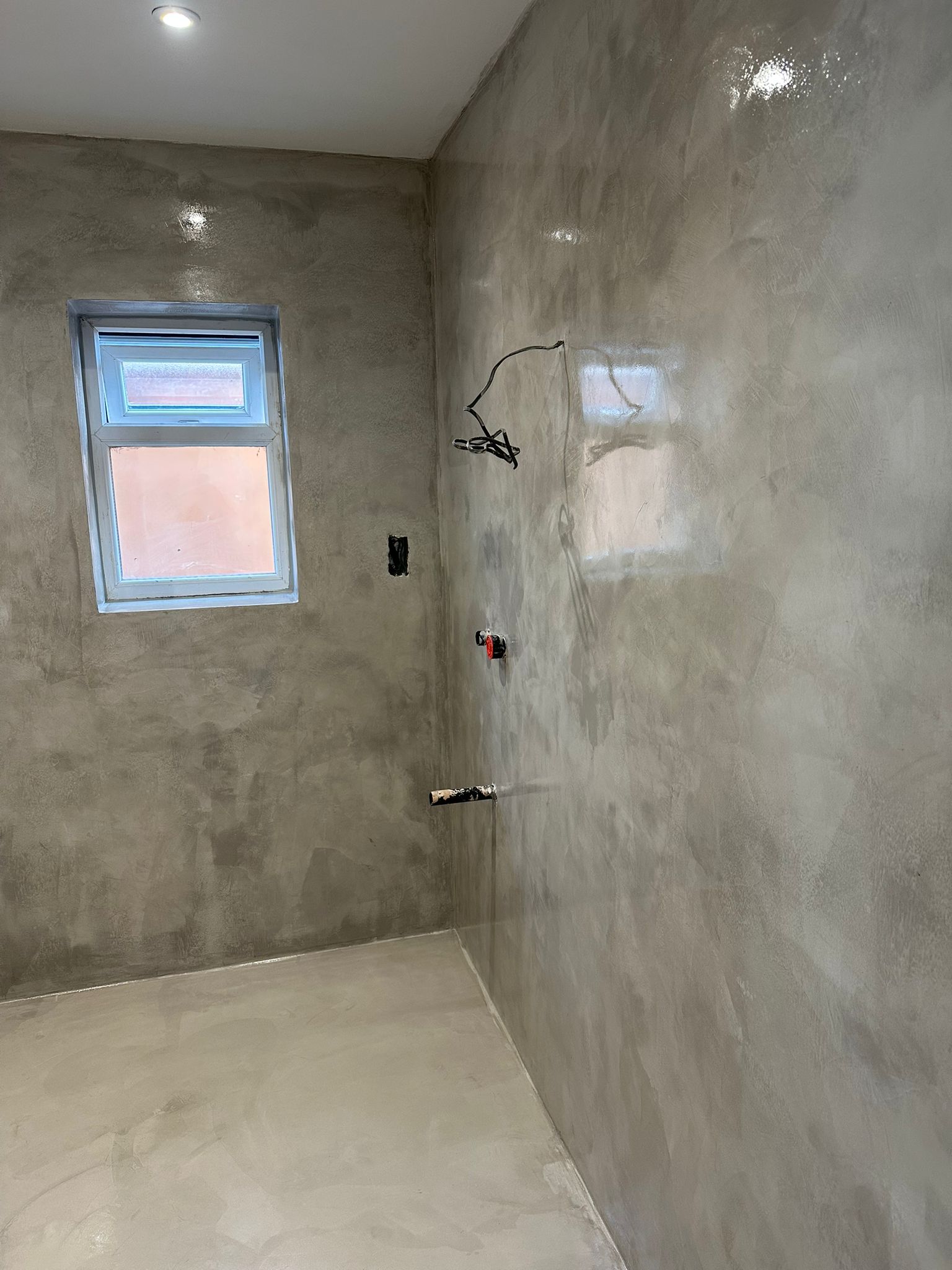
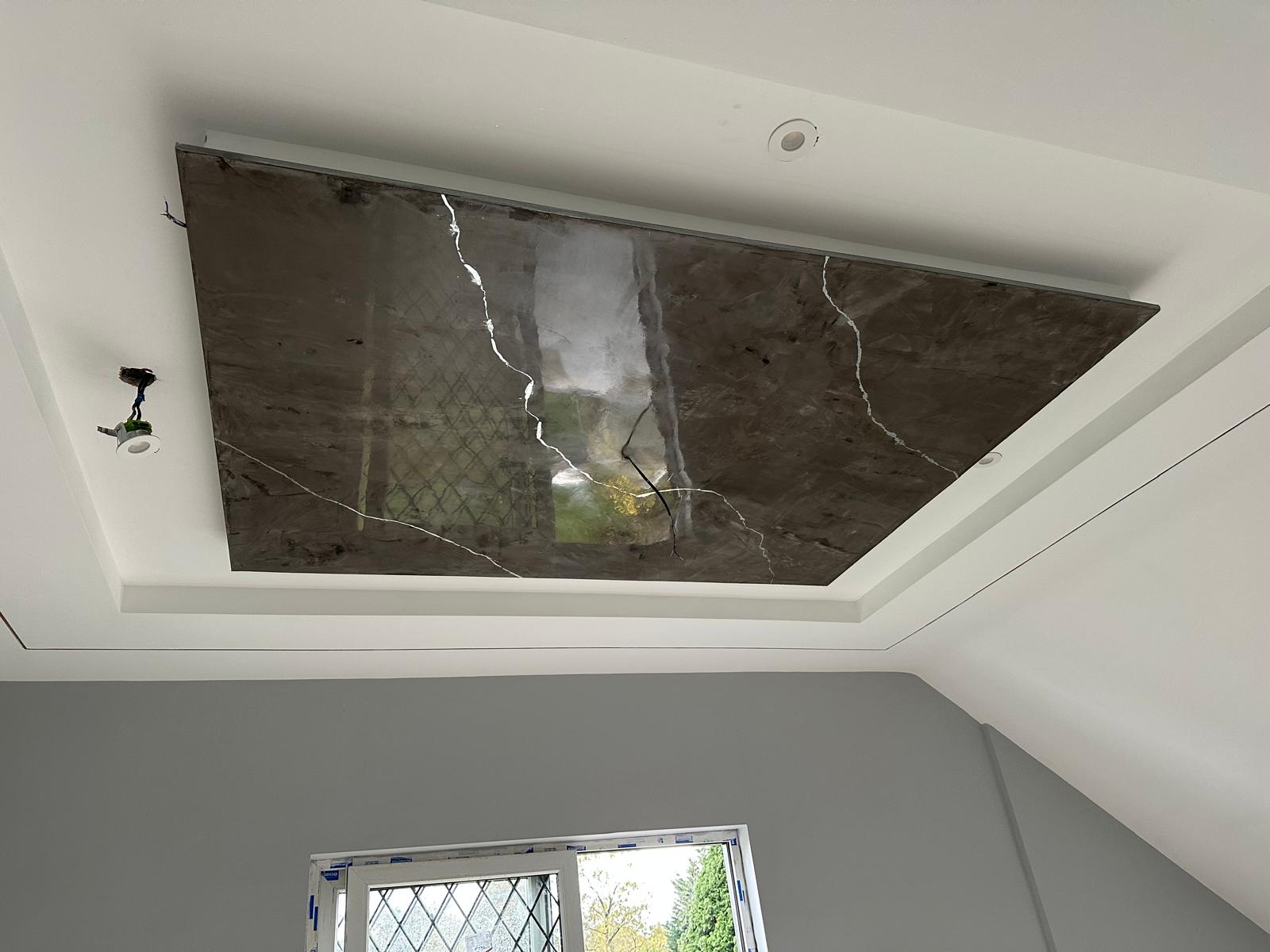
Some jobs are better made than applied. Panels are built on board off site, veined by hand and polished flat in controlled conditions, then installed — which keeps the dust out of a finished house and lets more ambitious veining be attempted.
Typical pieces: fire surrounds and hearth returns, headboard panels, bar and reception fronts, vanity tops, column wraps and inserts within joinery.
Hand-drawn veining
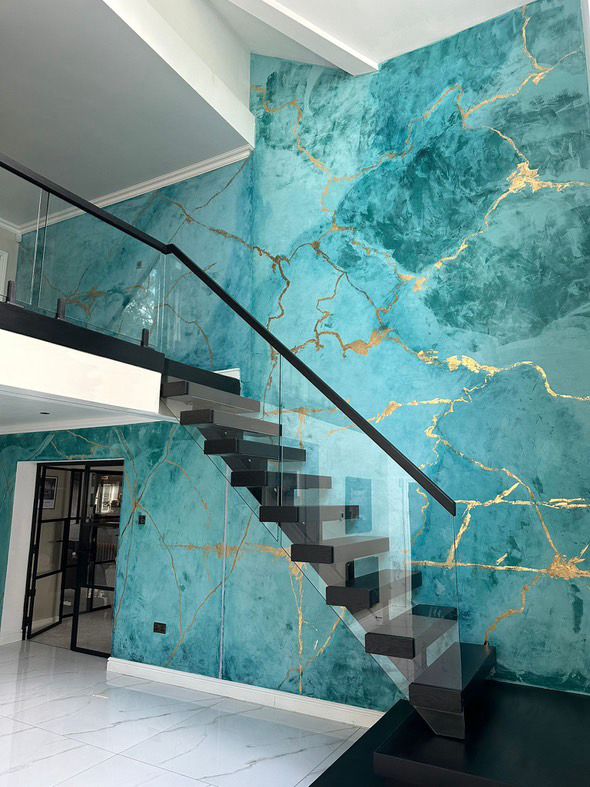
Scagliola veining is drawn in while the material is live, so no two panels repeat. Veins can be matched to a stone sample you already have, or drawn to a scale that suits the piece rather than copying a slab.
Fixing and finishing on site
Panels are scribed and fixed on site, with joints stopped and polished in so the piece reads continuous. Edges, returns and arrises are worked by hand.
Project photos
Recent bespoke venetian panels
Swipe to browse
How the job runs
01
Design and measure
Dimensions, veining scale and colour are agreed from your drawings or a site measure.
02
Sample panel
A small sample is made in the proposed veining and tone for sign-off.
03
Off-site build
The panel is built, veined and polished in controlled conditions.
04
Install
Fixed, scribed and jointed on site.
05
Seal
Sealed to suit its use — wax for decorative pieces, hard sealer for worktops and vanities.
Common questions
Can you match an existing marble?
Usually yes — send a photo or a sample and the veining and ground colour are mixed to match as closely as hand work allows.
Are panels suitable for worktops?
For vanities and bar tops, yes, sealed appropriately. For kitchen worktops around hobs and sinks we will talk through the limits first.
How far ahead should I book?
Off-site pieces need lead time for making and curing — usually two to four weeks before installation.